1. Oswald wasn't arrested for JFK killing
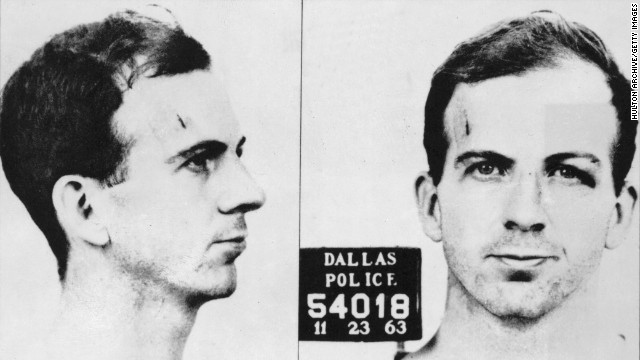
Mugshot of Lee Harvey Oswald, November 23,1963.
Lee Harvey Oswald was
actually arrested for fatally shooting a police officer, Dallas
patrolman J.D. Tippitt, 45 minutes after killing Kennedy. He denied
killing either one and, as he was being transferred to county jail two
days later, he was shot and killed by Dallas nightclub operator Jack
Ruby.
2. Assassinating the president wasn't a federal crime in 1963
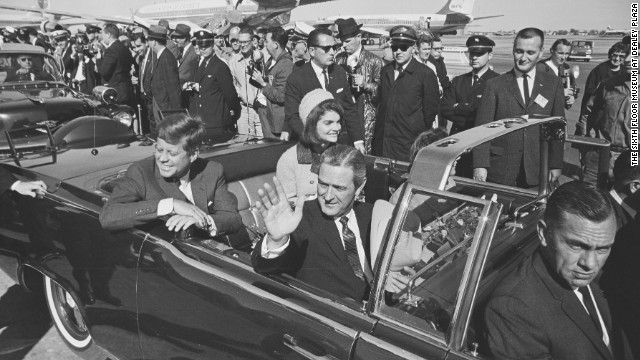
President John F. Kennedy moments before he was assassinated on November 22, 1963, in Dallas.
Despite the
assassinations of three U.S. presidents -- Abraham Lincoln, James
Garfield and William McKinley -- killing or attempting to harm a
president wasn't a federal offense until 1965, two years after Kennedy's
death.
3. TV networks suspended shows for four days
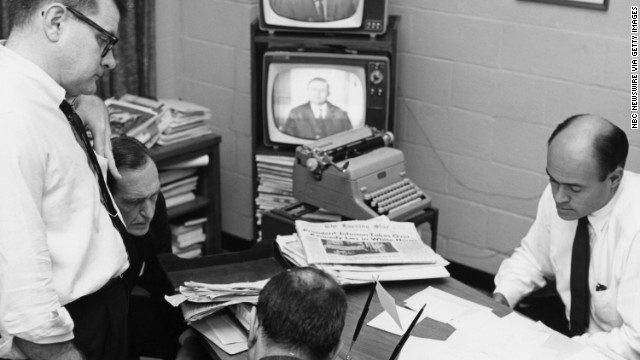
The NBC News Bureau covers the assassination of Kennedy.
On November 22, 1963, at
12:40 p.m. CST -- just 10 minutes after President Kennedy was shot --
CBS broadcast the first nationwide TV news bulletin on the shooting.
After that, all three television networks -- CBS, NBC, and ABC --
interrupted their regular programming to cover the assassination for
four straight days. The JFK assassination was the longest uninterrupted
news event on television until the coverage of the September 11 attacks
in 2001.
4. It led to the first and only time a woman has sworn in a U.S. president
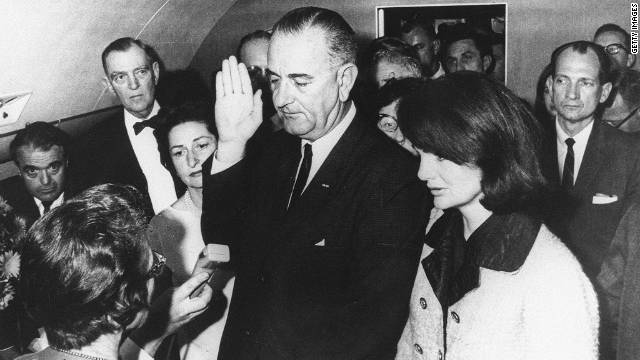
Sarah Hughes, lower left, became the only woman to preside over a presidential oath when she swore in Lyndon Johnson.
Hours after the assassination, Vice President Lyndon Johnson was sworn in as president aboard Air Force One,
with Jacqueline Kennedy at his side, an event captured in an iconic
photograph. Federal Judge Sarah Hughes administered the oath, the only
woman ever to do so.
5. Oswald had tried to assassinate Kennedy foe
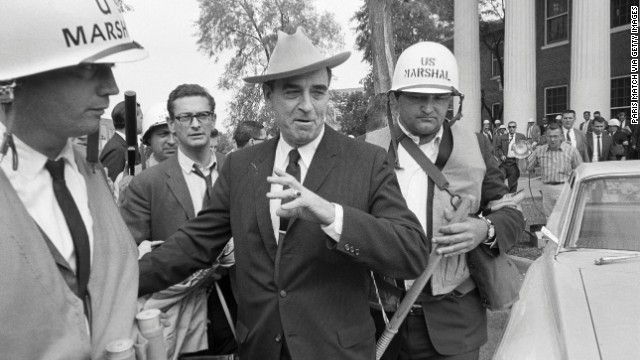
Edwin Walker organized protests against the racial integration of University of Mississippi in September 1962.
Eight months before Lee
Harvey Oswald assassinated JFK, he tried to kill an outspoken
anti-communist, former U.S. Army Gen. Edwin Walker. After his
resignation from the U.S. Army in 1961, Walker became an outspoken
critic of the Kennedy administration and actively opposed the move to
racially integrate schools in the South. The Warren Commission, charged
with investigating Kennedy's 1963 assassination, found that Oswald had
tried to shoot and kill Walker while the retired general was inside his
home. Walker sustained minor injuries from bullet fragments.


No comments:
Post a Comment